01
Organize your files.
Give files, accounts, and operational notes a clear home. Use names and structures that help you find the right information when you need it.
Where does the information live?


The O.A.K. Method
A practical way to make technology decisions around the information you depend on. I use these three questions to connect everyday IT work with a longer-term plan.
01
Give files, accounts, and operational notes a clear home. Use names and structures that help you find the right information when you need it.
Where does the information live?
02
Choose devices, software, networks, and services as a working system. Start with the job they need to do and the people who will maintain them.
How do the tools work together?
03
Plan for failed devices, lost access, and changing services. Use backups, restore checks, useful documentation, and formats you can take with you.
What happens when something fails?
An example from the field
This small-office map shows the Assemble question in practice: how power, network access, devices, storage, and backups depend on one another.
The point is to explain the system well enough to identify what needs attention and what a proposed change will affect.
See the assessment workflow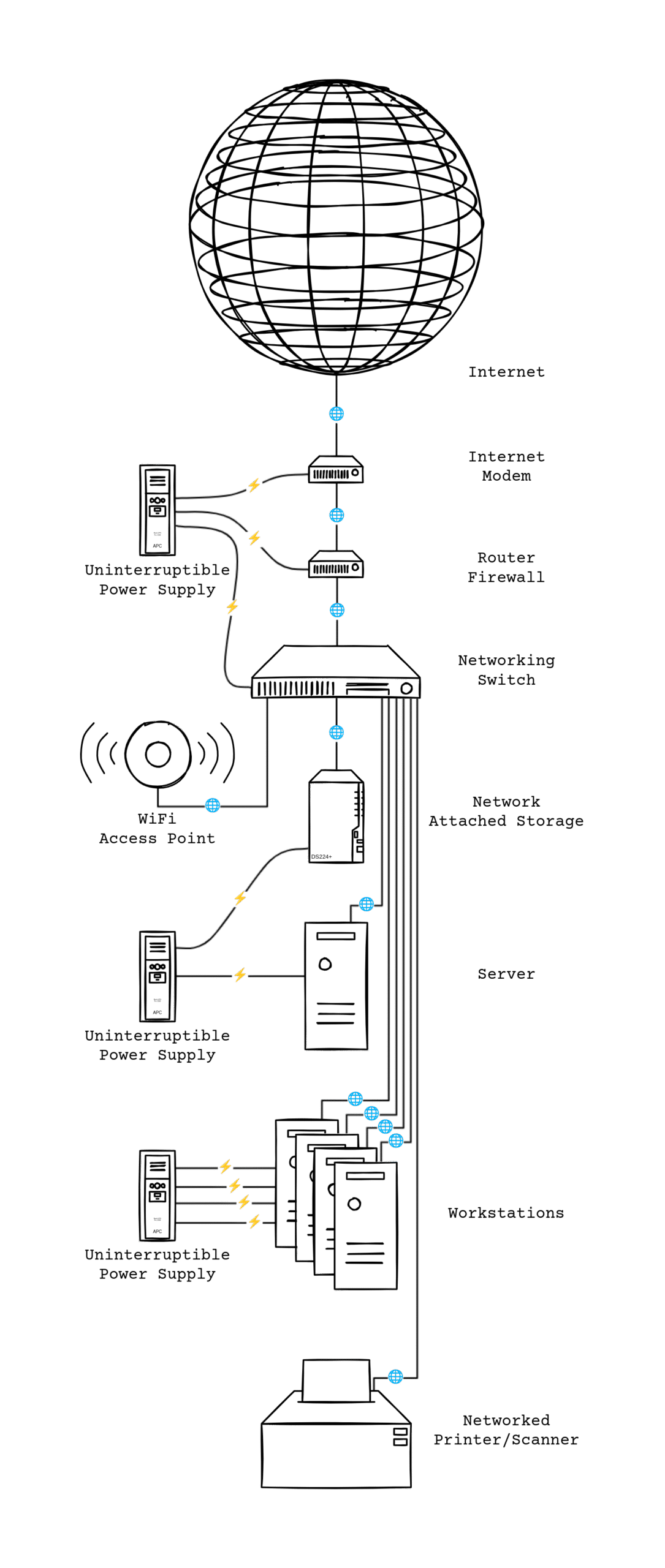
An AI workflow needs useful source material, appropriate tools, and a plan for reviewing and keeping its outputs. O.A.K. helps make those decisions explicit.
The Talking Computers guide adds the human practice: imagine a useful result, explain the task with context, and review what comes back.